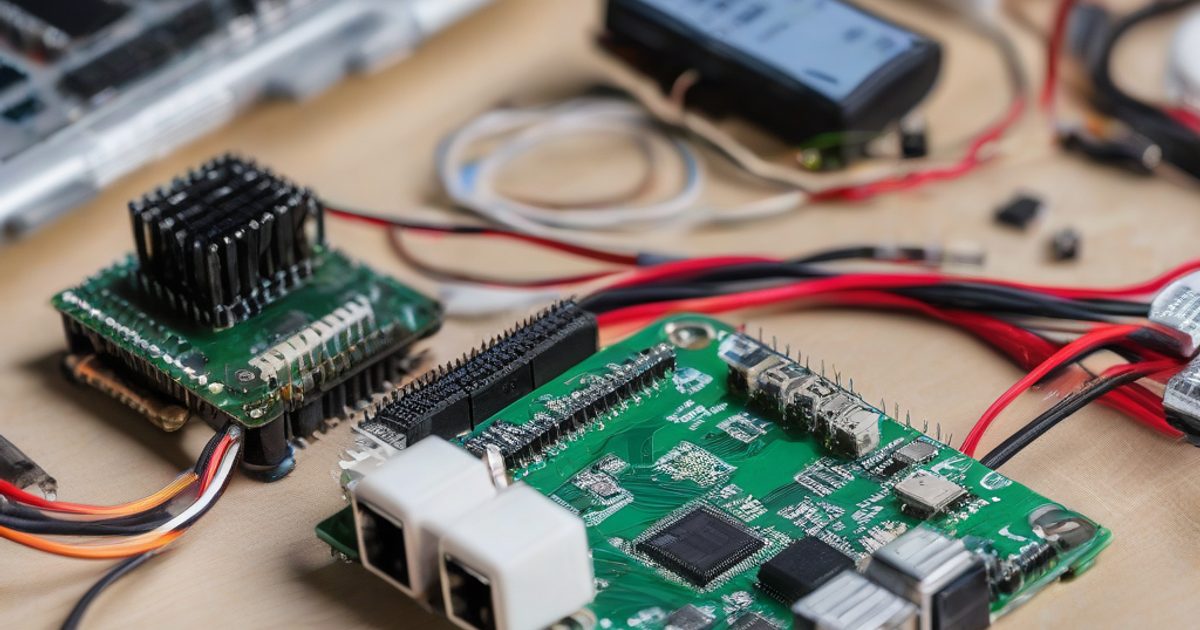
The ESP32, a low-cost, low-power microcontroller with integrated Wi-Fi and Bluetooth, is perfect for weekend IoT projects. Start with a **Wi-Fi-enabled soil moisture sensor** using an ESP32-WROOM-32 module, a capacitive soil sensor (e.g., SEN0193), and MQTT protocol. Configure the ESP32 to publish data to **Node-RED** via a **Mosquitto MQTT broker** running on a Raspberry Pi. This setup lets you monitor your garden remotely. For power efficiency, use deep sleep mode between readings, extending battery life to months with a 18650 Li-ion cell and a TP4056 charging module.
Build a **smart energy monitor** with an ESP32 and a PZEM-004T AC energy meter. This project connects to your home’s power line to measure voltage, current, power, and energy consumption. Use the ESP32’s Wi-Fi to send data to **InfluxDB** for time-series storage and visualize trends in **Grafana**. Add an **OLED display** (SSD1306) for local readings. For a polished finish, 3D-print a case and integrate a **Blynk** dashboard for alerts when consumption exceeds thresholds. This device helps track appliance-level power usage without expensive smart plugs.
Key Concepts
Create a **Bluetooth Low Energy (BLE) beacon tracker** using an ESP32 with built-in BLE support. Pair it with a **nRF Connect** app to simulate or track Bluetooth devices like beacons, smart locks, or wearables. Configure the ESP32 as a BLE scanner and send detected device IDs via MQTT to a central server. For outdoor tracking, use a **GPS module** (e.g., NEO-6M) and log coordinates to a **Google Sheets** spreadsheet via **IFTTT**. This project is ideal for asset tracking in warehouses or monitoring pet locations with small BLE tags like the **Tile Pro**.
Technology is constantly evolving. This guide provides practical technical information to help you build and deploy IoT solutions with confidence.
Related: Raspberry Pi IoT: Building a Real-Time Weather Station with DHT22 and MQTT · Low-Power IoT: How BLE and Zigbee Compare for Battery-Powered Devices
Practical Implementation
Assemble a **voice-controlled smart plug** using an ESP32, a **HLK-PM01** AC-DC converter, and a **relay module**. Flash the device with **ESPHome** firmware and integrate it with **Home Assistant** via Wi-Fi. Use the ESP32’s I2S interface to add a **INMP441 MEMS microphone** for local wake-word detection with **ESP-SR** firmware. This lets you turn appliances on/off via voice commands without relying on cloud services. For a modular design, use screw terminals and a **3D-printed enclosure** for safety. This plug costs under $20 and rivals commercial smart plugs in functionality.