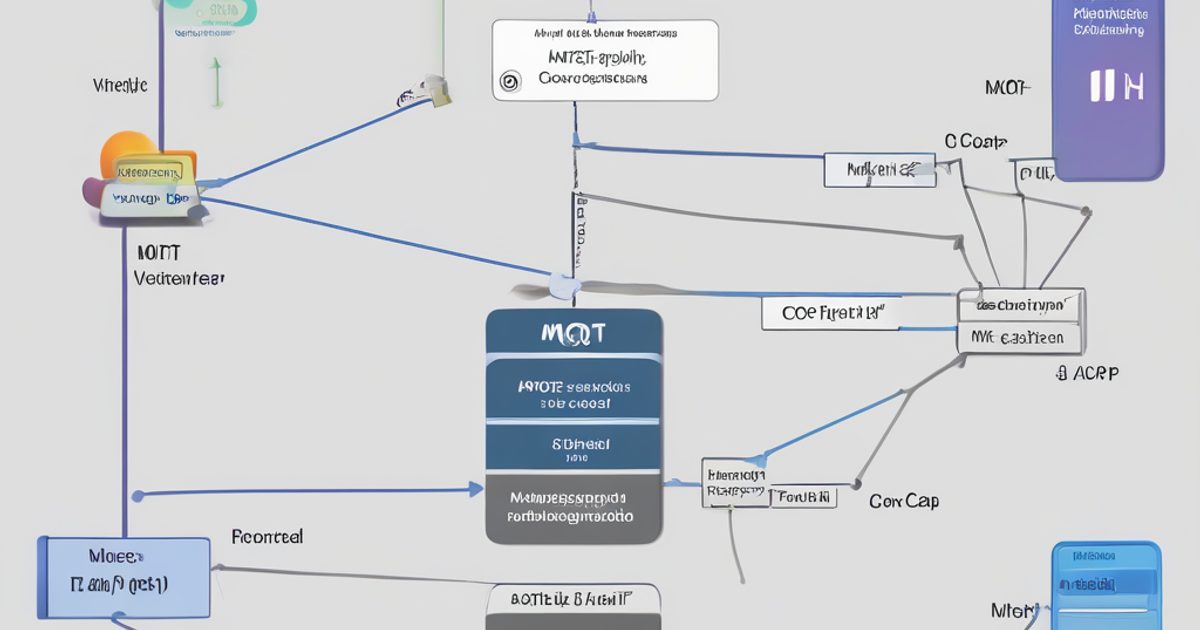
MQTT and CoAP are two dominant lightweight protocols for IoT, each optimized for edge computing. MQTT (Message Queuing Telemetry Transport) uses a publish-subscribe model with TCP as its transport layer, making it ideal for low-bandwidth, high-latency networks. It’s widely adopted in industrial IoT (e.g., Siemens MindSphere) for telemetry data from PLCs or SCADA systems. MQTT supports QoS levels (0, 1, 2) and retains sessions, ensuring reliable message delivery—critical for real-time monitoring. Its broker-based architecture (e.g., Eclipse Mosquitto, HiveMQ) simplifies device management but adds a single point of failure if not clustered.
CoAP (Constrained Application Protocol) is a UDP-based protocol designed for constrained devices and networks, leveraging RESTful principles for simplicity. It’s a top choice for resource-constrained edge devices (e.g., ARM Cortex-M microcontrollers) in smart home applications like Philips Hue or Zigbee gateways. CoAP supports DTLS for security and resource discovery via /.well-known/core, enabling efficient one-to-many communication without a broker. Its compact binary header (4 bytes) reduces overhead, making it ideal for LPWAN (e.g., LoRaWAN) deployments. However, CoAP lacks native QoS guarantees, requiring application-layer handling for reliability.
Key Concepts
For edge computing workloads, MQTT excels in scenarios requiring guaranteed delivery and scalability, such as predictive maintenance in factories. Tools like Node-RED integrate seamlessly with MQTT brokers to process sensor data (e.g., temperature from Raspberry Pi) before cloud offloading. CoAP shines in localized, low-power networks like smart buildings, where devices communicate directly (e.g., ESP32-powered sensors with CoAP over 6LoWPAN). Edge gateways (e.g., Raspberry Pi 4) often bridge both protocols: translating CoAP to MQTT for cloud compatibility while preserving battery life for sensors.
Technology is constantly evolving. This guide provides practical technical information to help you build and deploy IoT solutions with confidence.
Related: Edge Computing Explained: Why IoT Needs Processing at the Edge · TinyML: Running Machine Learning on Microcontrollers for Edge Computing
Practical Implementation
Choose MQTT for cloud-centric, high-reliability IoT systems (e.g., AWS IoT Core, Azure IoT Hub) and CoAP for edge-native, resource-constrained deployments (e.g., Contiki-NG OS). Hybrid approaches, like using CoAP for local sensor networks and MQTT for cloud aggregation, optimize both performance and cost. Always evaluate protocol overhead: MQTT’s TCP handshake adds ~20 bytes/connection, while CoAP’s UDP reduces this to ~4 bytes but requires manual error handling. Test with tools like MQTT-SN for MQTT or libcoap for CoAP to validate latency and throughput under edge conditions.